
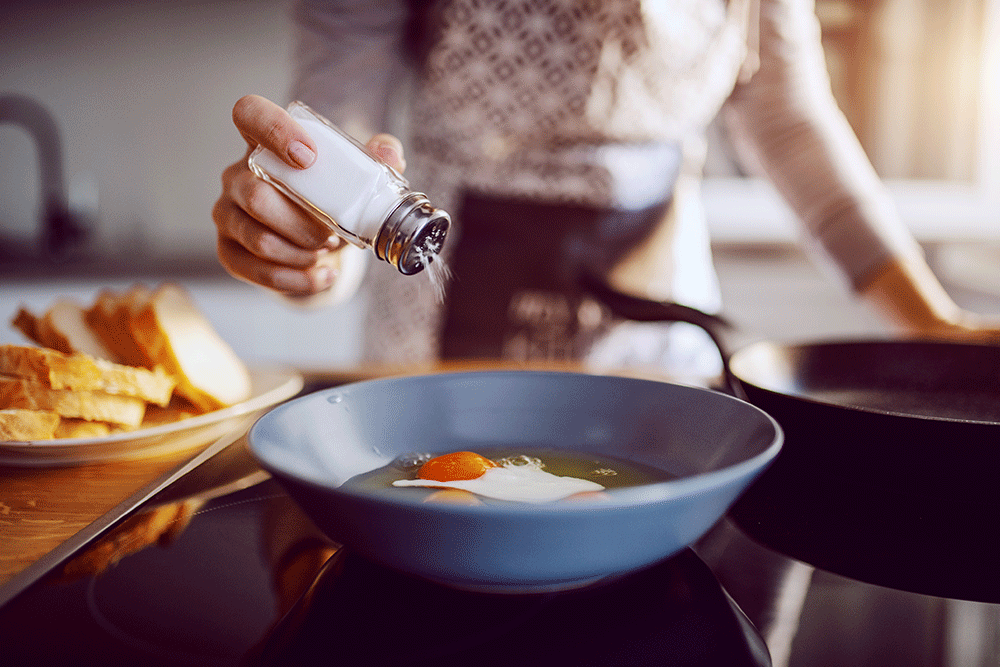
A diet high in salt can cause raised blood pressure, which can increase your risk of heart disease and stroke. Adults should eat no more than 6g of salt (2.4g sodium) each day (around 1 level teaspoon) and this is even less for children and babies. Most people currently eat far more than this, with data suggesting we average around 8g daily.
Around 75% of the salt we consume is ‘hidden salt’ which means it’s already in the foods we eat. For this reason, it’s important to understand how much salt you consume, and if needed, how to reduce your salt intake.
What is salt?
Salt generally refers to sodium chloride. There are lots of different types of salt, but no one type is any better or worse for you. Salt is important in controlling water levels in our body, but it is rare for anyone to need more salt than they currently have. As mentioned, the vast majority of us consume too much salt.
Salt, blood pressure and our kidneys
Our kidneys help to maintain a healthy blood pressure by removing water from the blood. But too much salt can pull the water back into the blood stream. More salt in the blood means more water in our blood vessels, which leads to higher pressure in the vessels.
If this continues over a prolonged period then this can cause chronic hypertension (high blood pressure). When the blood pressure is higher, the blood vessels have to work harder to resist the higher pressure. This is what puts us at an increased risk of heart disease and stroke, among other illnesses. Another major issue is the effect that the salt has on our kidneys. In order to remove excess water from the blood our body uses a process known as ‘osmosis’. This process uses a delicate balance of sodium and potassium to pull the water across a wall of cells into a channel that leads to the bladder (where the excess water can be removed).
An increased level of salt disrupts the balance between the sodium and potassium, which disrupts the process and puts extra strain on the kidneys. Over time, this added strain can lead to damage of the kidneys or kidney disease. If left untreated, this can result in kidney failure, where the kidneys are no longer able to filter the blood, leading the body to become poisoned by its own waste products.
The good news is we can reduce our salt intake by using simple strategies. Below we’ve covered some of these in more detail.
- Look out for salt that’s ‘hidden’. There are many foods – such as bacon, ham, smoked meat and soy sauce – that are often high in salt. These should be eaten less frequently or in smaller quantities. Other food that can be high in salt include bread products, pasta sauces, pizzas, ready meals, soups and condiments. These vary depending on the brand so it is worth checking the label to make an
informed choice. - Shop for lower-salt foods. There is now a much bigger market for reduced salt products, with more emphasis on food production companies to cut their salt levels. Take some time to choose the reduced salt versions of different foods. For example, go for reduced salt unsmoked back bacon, tuna in freshwater instead of brine, or tomato based sauces as oppose to cheese based ones.
- Check the label. Have a quick look at the salt content in foods that you buy and opt for the lower salt options. You can also use the handy Change4Life Food Scanner to help you to monitor your salt intake. Simply scan the barcode on your smartphone!
- Cook with less salt. Many people add salt to their food whilst cooking in order to increase flavour, but there are plenty of alternatives to do this with. You could try black pepper, fresh herbs and spices to add extra flavour to your meal. Garlic, ginger, chilli or lime are all excellent
alternatives too.
You could also try making your own stock and gravy instead of using stock cubes or gravy granules, or alternatively, look for reduced salt versions instead.
Another excellent way of cooking is to create your own sauces instead of relying on the ready made versions that are often high in salt. These take little time to create and will help to reduce the amount of salt used significantly. Out of habit, we may be adding salt even if it’s not needed. To avoid this happening taste your food first, and then add an alternative option, or add salt sparingly if it is required. - Keep salt away from the table. If the salt is not there, then it’s far less tempting to add more. Keeping it away from the table means you will have to get back up mid meal to add more, which may be enough to put you off.
- Reduce salt gradually. It can be hard to change a habit, but if you gradually reduce your salt intake you can adjust your taste buds easier without noticing a distinct difference in taste.
- Choose snacks lower in salt. If you are reaching for a snack that would typically be high in salt, try choosing unsalted nuts instead of salted, or unsalted popcorn instead of crisps.
- Choose lower salt alternatives when eating out. Consider using the below substitutes to help reduce your salt intake when you’re eating out:
– Pizza: try vegetable or chicken toppings instead of pepperoni or extra cheese.
– Pasta: try tomato sauces instead of cheese, and chicken instead of red meat.
– Burgers: try salad as your topping instead of red meat.
– Rice: try plain rice instead of pilau or egg fried rice.
– Salad: ask for dressings on the side and only add what you need. Try reduced fat mayonnaise instead of pickle or mustard.
– Sandwiches: try chicken, egg, or vegetables as a filling instead of ham and cheese. - Increase potassium intake. Eat more fruit and vegetables to increase your potassium levels. This helps to counteract the effects of excess sodium.
- Get your blood pressure checked regularly. High blood pressure rarely has any symptoms, so it’s important to make it a priority and get it checked on a regular basis.
Further support
British Heart Foundation – Advice on managing your salt intake
Blood pressure UK – Information about the impact of salt on your blood pressure
NHS – Salt and your diet
Ref: WPW0304 this information was published May 2024.