
Know Your Numbers Week, organised by the charity Blood Pressure UK, is the UK’s biggest blood pressure testing and awareness event.
The British Heart Foundation estimates that as many as many as four million people under the age of 65 in the UK are living with untreated high blood pressure. As many as 1.3 million of these are aged under 45.
To an extent, this isn’t surprising, given that high blood pressure (or ‘hypertension’ as it is known medically) generally doesn’t have any visible symptoms. Yet it can significantly raise your risk of heart attack and stroke and is associated with an increased risk of vascular dementia. These facts combined explain why it is often referred to as ‘the silent killer’.
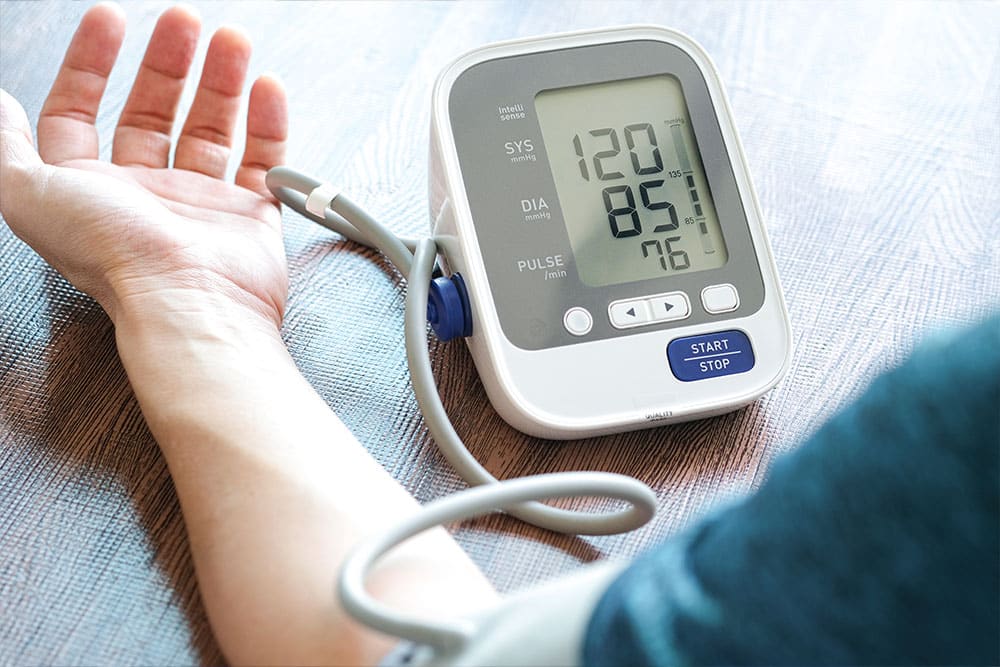
However, it is easy to monitor your own blood pressure. You can do it at home with an off-the-shelf monitor, which you can buy at supermarkets and pharmacies. Blood pressure checks are also offered to anyone aged over 40 as part of the NHS Health Check health ‘MOTs’.
Your local pharmacy may now, too, offer free blood pressure checks, as part of an initiative being run by NHS England.
When it comes to home testing, Blood Pressure UK points out that home monitoring is an effective and inexpensive way to keep track of your blood pressure. It allows people to take more control of their health and take pressure off the NHS.
The fact that relatively simple lifestyle changes can help to reduce high blood pressure means that home testing can be a great way to nip any problems in the bud early.
Understanding high blood pressure
Blood Pressure UK has an online ‘resource hub’ to help you manage and measure your blood pressure at home. This includes a video showing how to take a reading, how to get the most from any home monitor and various other resources.
For most healthy adults a ‘normal’ reading will be between 90mmHg over 60mmHg, which will show on a monitor as ‘90/60’, and 120mmHg over 80mmHg (or 120/80). A reading consistently at or above 140/90 is a likely sign of high blood pressure.
The key word here is ‘consistently’. Your blood pressure will naturally fluctuate during the day. For example, if you take a reading after pounding upstairs or if you’re feeling stressed it will probably be higher than if you are calmly sitting down.
It makes sense to try and take a reading at around the same time of day. If you are consistently getting readings higher or lower than ‘normal’ over a period of time, normally a number of weeks, that may be a sign of a problem. You may want to make some lifestyle changes (see below) and/or get checked out by your GP.
Low blood pressure (or hypotension) is a reading consistently below 90/60mmHg. If you have low blood pressure, this can cause symptoms such as light-headedness or dizziness, feeling sick, blurred vision, generally feeling weak, confusion, or fainting. While generally less of a concern than high blood pressure, it’s worth seeing your GP is you are consistently getting low readings.
How to manage or reduce high blood pressure
As the NHS advises, while there are treatments and drugs for high blood pressure, adopting a healthier lifestyle and diet changes can also have a significant impact on helping to reduce high blood pressure. Risk factors of high blood pressure include:
- Being overweight
- Consuming too much salt
- Not eating enough fruit and vegetables
- Not getting enough physical exercise
- Drinking too much alcohol or coffee (or other caffeine-based drinks)
- Smoking
- Not getting enough quality sleep
- Being aged 65 or over
- Having a relative with high blood pressure
- Being of black African or black Caribbean descent
- Living in a deprived area
While some of these are not going to be affected by lifestyle changes, there are steps that can help, such as:
- Cutting your salt intake to less than 6g a day (or about a teaspoonful)
- Eating a low-fat, balanced diet
- Being more active and engaging in more exercise
- Cutting down on alcohol
- Losing weight
- Drinking less caffeine
- Stopping smoking
How employers can help
A good starting point for employers is to engage with initiatives such as Know Your Numbers Week and include blood pressure awareness materials within internal comms to staff.
Encouraging employees to check their blood pressure regularly is a good preventative measure to promote. Another proactive way employers can help is through offering their own programme of mini health checks. These types of short assessments can be accessed through an occupational health provider and used to check things such as:
- Blood pressure
- Height and weight
- Glucose
- Cholesterol
- BMI (body mass index)
On top of this, having a yearly drip-feed of health and wellbeing supportive content for staff will help to educate them on healthy habits they can adopt to look after their physical and mental health.
Summary
High blood pressure can be a ‘silent killer’, given that it normally has no visible symptoms yet can put an individual at higher risk of heart attack or stroke. The good news is that it is relatively easy to monitor. Often a few simple lifestyle changes can make a difference and help to reduce high blood pressure.
Engaging with initiatives such as Know Your Numbers Week, encouraging home and community testing and even offering mini health checks via an occupational health provider can all help to protect the health and wellbeing of your staff.
Find further advice and support at Blood Pressure UK.