Enhancing your posture might not directly tackle the root cause of your pain, but it can effectively relieve muscle tension. Therefore, mindful consideration of your posture serves as a valuable tool in reducing muscle aches and alleviating back or joint pain.
Beyond its impact on physical discomfort, correcting your posture can yield positive effects on your mental wellbeing. By adopting a straighter sitting or standing position, more oxygen can reach your lungs and muscles, facilitating deeper breathing. This also helps to maintain self-esteem and boost your mood, confidence and assertiveness.
Initially, it might feel unusual or awkward to maintain corrected posture, especially if your body is accustomed to poor alignment. However, this discomfort is temporary and will diminish over time. To help you navigate this transition, here are some practical tips to help improve your posture.
Strengthen your core
Strengthening your core involves targeting the muscles in your abdomen, back, pelvis, and hips. A strong core provides stability, supports good posture, and can help prevent injuries. Here are various exercises that can help strengthen your core:
- Planks:
- Get into a push-up position, with your weight resting on your forearms and toes.
- Keep your body in a straight line from head to heels, engaging your core muscles.
- Hold the position for as long as you can, gradually increasing the time.
- Crunches:
- Lie on your back with your knees bent and feet flat on the floor.
- Place your hands behind your head, lift your shoulders off the ground, and engage your abdominal muscles.
- Lower your shoulders back down without letting your lower back arch.
- Leg raises:
- Lie on your back with your hands at your sides.
- Lift your legs toward the ceiling while keeping them straight.
- Slowly lower your legs back down without letting them touch the ground.
- Russian twists:
- Sit on the floor with your knees bent and lean back slightly.
- Lift your feet off the ground, balance on your sit bones, and twist your torso from side to side.
- Bridge exercise:
- Lie on your back with your knees bent and feet flat on the floor.
- Lift your hips toward the ceiling, creating a straight line from your shoulders to your knees.
Adopt a good sitting posture
Spending long periods of the day sitting can lead to problems with posture. Things such as slouching, slumping or sitting on your crossed legs can negatively impact your body. Maintaining good posture while sitting is important for spinal health and overall wellbeing. Here are some tips to help you achieve a good posture while sitting:
- Sit up straight: Keep your back straight and your shoulders back, and avoid slouching or rounding your spine.
- Use a supportive chair: Choose a chair that supports the natural curve of your spine. Your feet should be flat on the ground, and your knees should be at a 90-degree angle.
- Keep your feet flat: Place your feet flat on the ground, hip-width apart. If your feet don’t reach the floor, use a footrest to maintain proper alignment.
- Keep knees at hip level: Ensure that your knees are at or slightly below hip level. Adjust your chair height if needed.
- Elbows and arms: Keep your elbows close to your body and form an angle between 90 and 120 degrees. Your forearms should be parallel to the ground.
- Avoid crossing your legs: Keep your knees and ankles uncrossed to maintain proper alignment of your hips and spine.
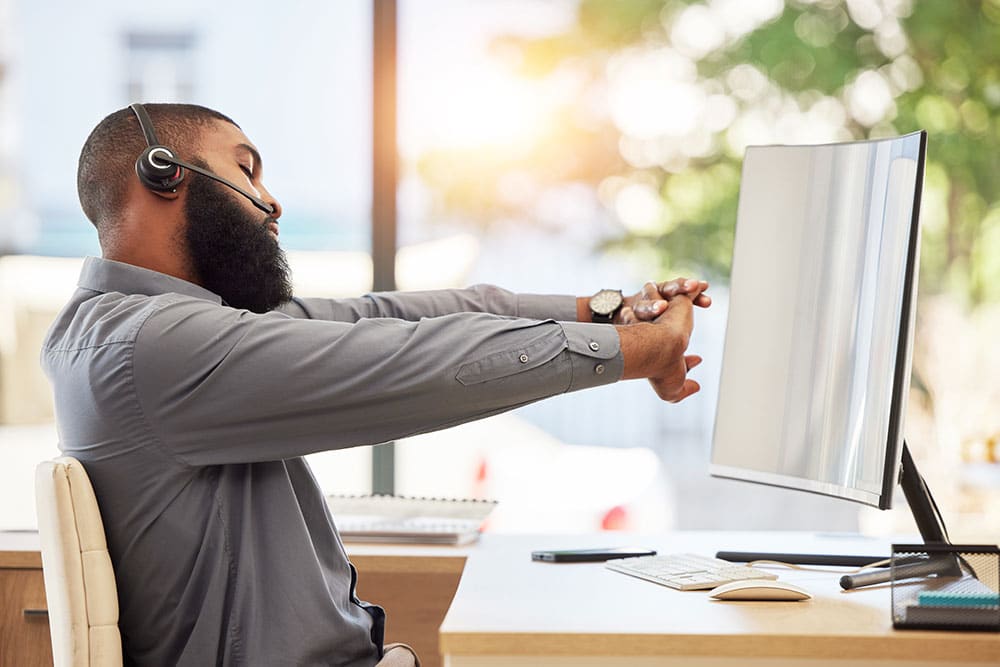
- Take breaks: Stand up and stretch every 30 minutes to prevent stiffness and promote circulation.
- Position your computer screen correctly: Place your computer screen at eye level to avoid straining your neck. Use a chair with good back support and, and if necessary, adjust the screen height.
- Avoid text neck: When using your phone, hold it at eye level to prevent bending your neck forward for prolonged periods.
- Engage your core: Gently engage your abdominal muscles to support your spine. This helps relieve pressure on your lower back.
- Relax your shoulders: Keep your shoulders relaxed and avoid tensing them up toward your ears.
- Organise your desk space: Keep your desk space free from clutter.
Stretch your shoulders
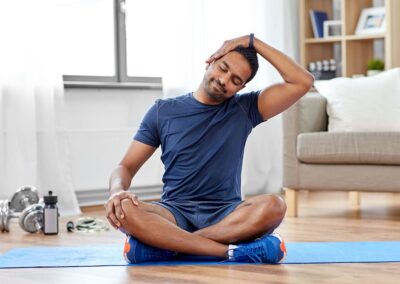
Muscle tightness is another contributor to poor posture, and long periods spent on screens hunched over can often add to tightness or soreness. It is important to stretch your shoulders and neck to ensure they remain comfortable in neutral positions.
Try these exercises from the Chartered Society of Physiotherapy to help relieve any tension in your shoulders.
Stand as tall as you can
By thinking about your posture when you sit, stand and move, you can improve your postural habits. When standing, always try to stand as tall as you can, extending your neck without your shoulders rolling forwards. Pull your shoulders back and tuck in your chin to help with this.
Additionally, engaging your core muscles by pulling in your tummy slightly and clenching your buttocks will also help you to achieve the perfect posture.
Further support
Psychology Today– Good posture benefits for body and mind.
NHS– Strength and flexibility exercises.
Harvard Health – Why good posture matters.
Sources:
www.nhs.uk/apps-library/spinewise
www.nhs.uk/live-well/exercise/commonposture-mistakes-and-fixes
www.nhs.uk/conditions/back-pain/treatment
www.menshealth.com/fitness/a19533020/corestrengthwww.healthline.com/health/shouldermobility-exercise
www.psychologytoday.com/gb/blog/changepower/202212/heads-good-posture-helps-both-your-mind-and-your-body
This information was published November 2023.