
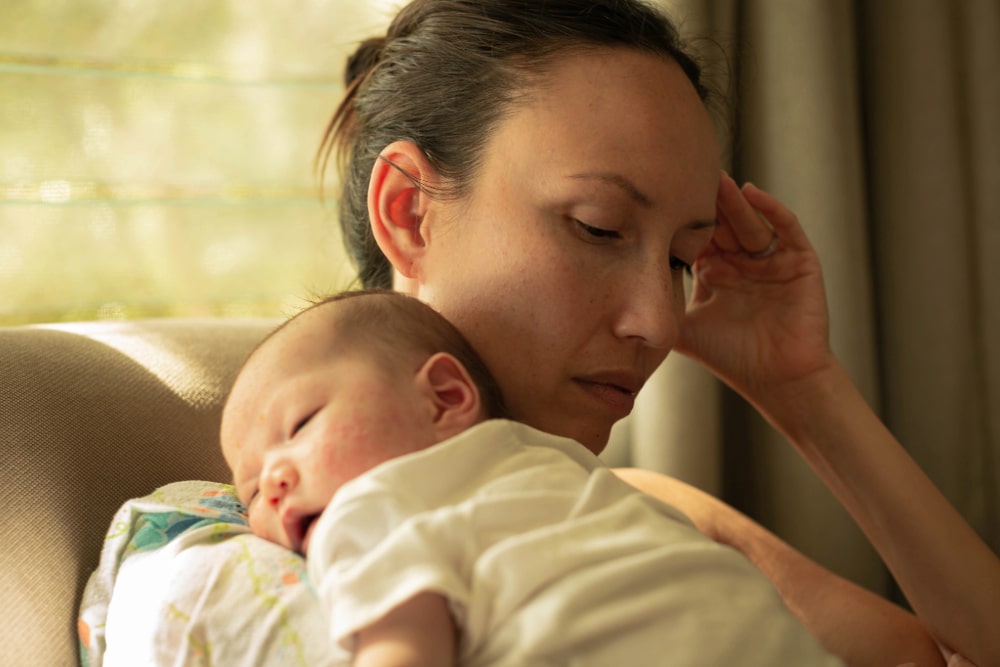
Although 80% of post-natal women may experience ‘Baby Blues’, a form of moodiness following the birth of a child, this will in most cases resolve relatively quickly with no long-lasting impact.
The more significant illness Post Natal Depression (PND) (also known as Postpartum Depression) is estimated to affect more than 1 in every 10 women within a year of given birth.
Symptoms can develop for up to 2 years after the birth of a baby and may include some of the following:
- Tiredness and lack of energy
- Chest pains, breathing problems and dizziness
- Low mood or depression
- Lack of self-esteem
- Loss of enjoyment and interest in life
- Feelings of guilt, and concerns about being a bad mother
- Loss of libido
- Re-living a traumatic birth
- Lack of feeling for your baby
- Thoughts of harming yourself or the baby
- Worrying excessively about safety issues
- Difficulty coping
PND can also affect fathers and parents who adopt.
In rare and more severe cases, post-natal psychosis accompanied by hallucinations and delusions may develop.
What can I do?
- Talk to your GP, who can discuss different options of support available to you.
- It is important for new mothers to take regular breaks, and if possible, ask friends or family to baby-sit, or consider the possibility of a nursery/day-care for regular brief periods.
- Look after your health by eating healthily and trying to catch-up on sleep. If this is difficult, you could try sleeping while your baby sleeps.
- You may need to explain to your employer why you need additional time off from work.
- Share your feelings and concerns with friends or family.
Further support
NHS – Information on symptoms and places to access support.
PANDAS – Post-natal depression awareness and support.
Tommy’s – Information on post-natal anxiety.
Mind – Exploring symptoms and support for post-natal depression.
Ref: WPW0067 this information was reviewed and updated August 2024.